
Remote lithotripsy
Remote shockwave lithotripsy. This method presumes generating an acoustic wave outside the patient’s body and focusing it on a calculus in the kidney or ureter. The patient`s body in this case acts as a liquid mass because it consists of 80% water conducting the acoustic wave, which energy is absorbed by crystalline grid of the concrement. In most cases, the procedure is provided to outpatient without anesthesia; the fragments are expected to pass within 2 weeks after the procedure.
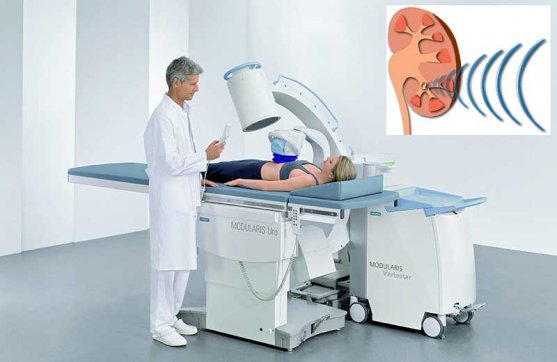
Remote lithotripsy process
Remote lithotripsy
Advantages of remote lithotripsy:
- No necessity to enter into the human body;
- No necessity to hospitalize a patent;
- No necessity to administer an anesthesia;
- High efficacy of removal (destruction) of low-density calculi up to 1 cm in size.
Disadvantages of remote lithotripsy:
- Absence of quick effect;
- The necessity of repeat sessions in 30% of patients;
- The presence of renal colic and unpleasant sensations within a few days after the procedure;
- A risk of hematoma, especially when a wave passes through the kidney tissue;
- Low efficacy for calculi greater than 1 cm, high-density calculi, and in cases of long stay of calculi in the ureter, which may potentially require using other treatment options despite of already spent time and money.
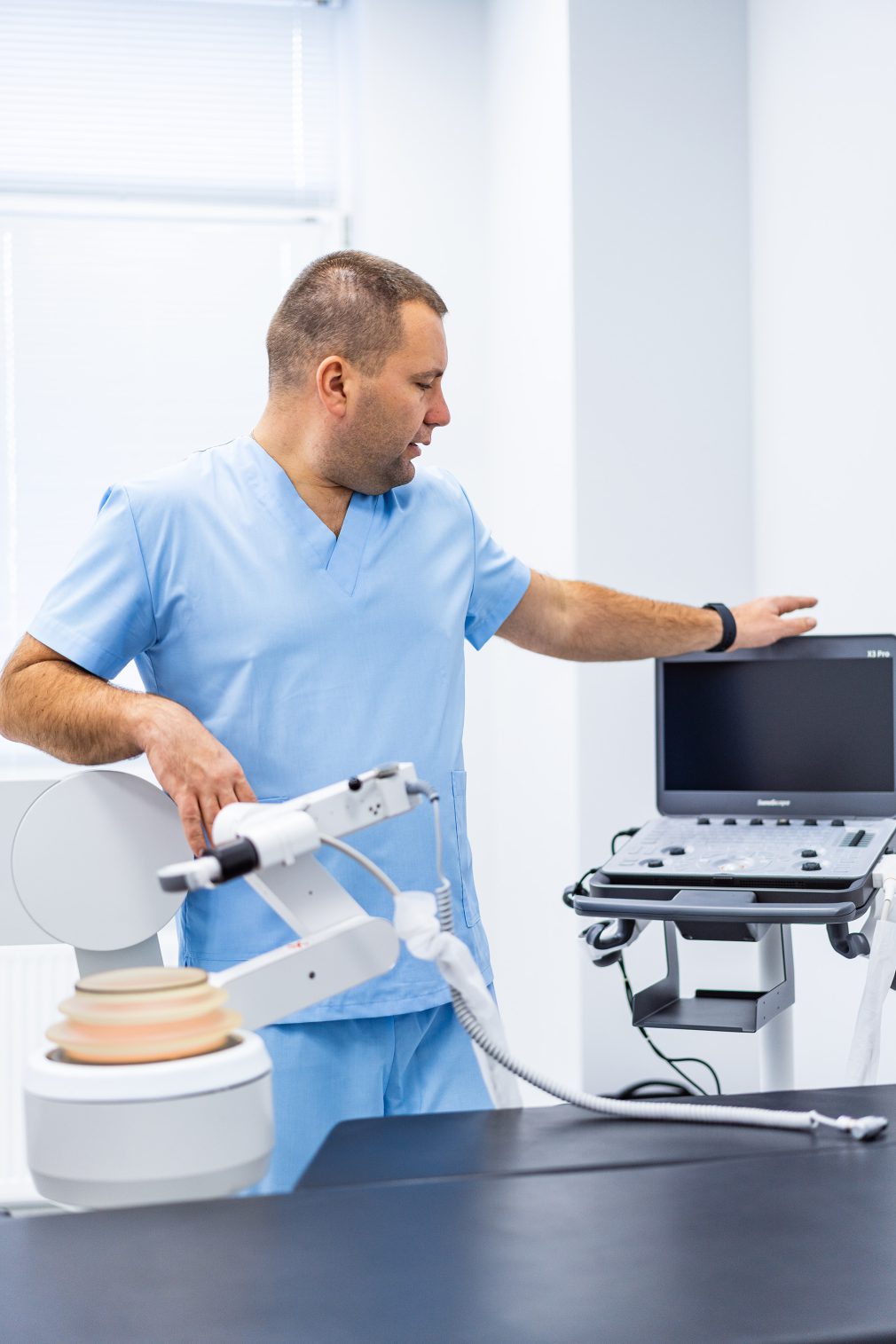
Dornier Compact Sigma
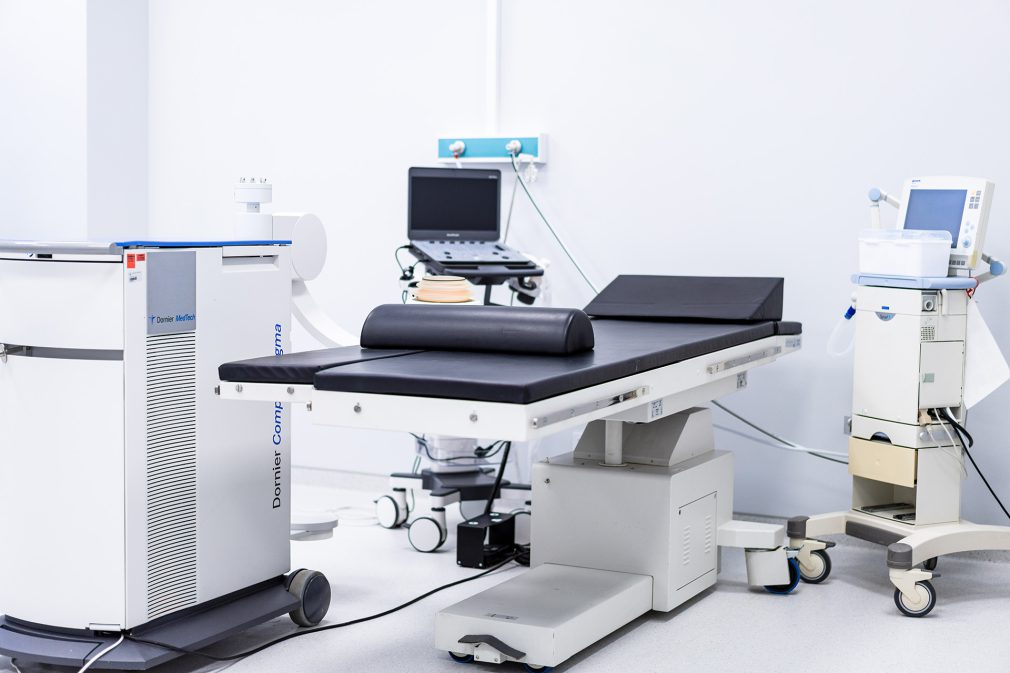
Dornier Compact Sigma
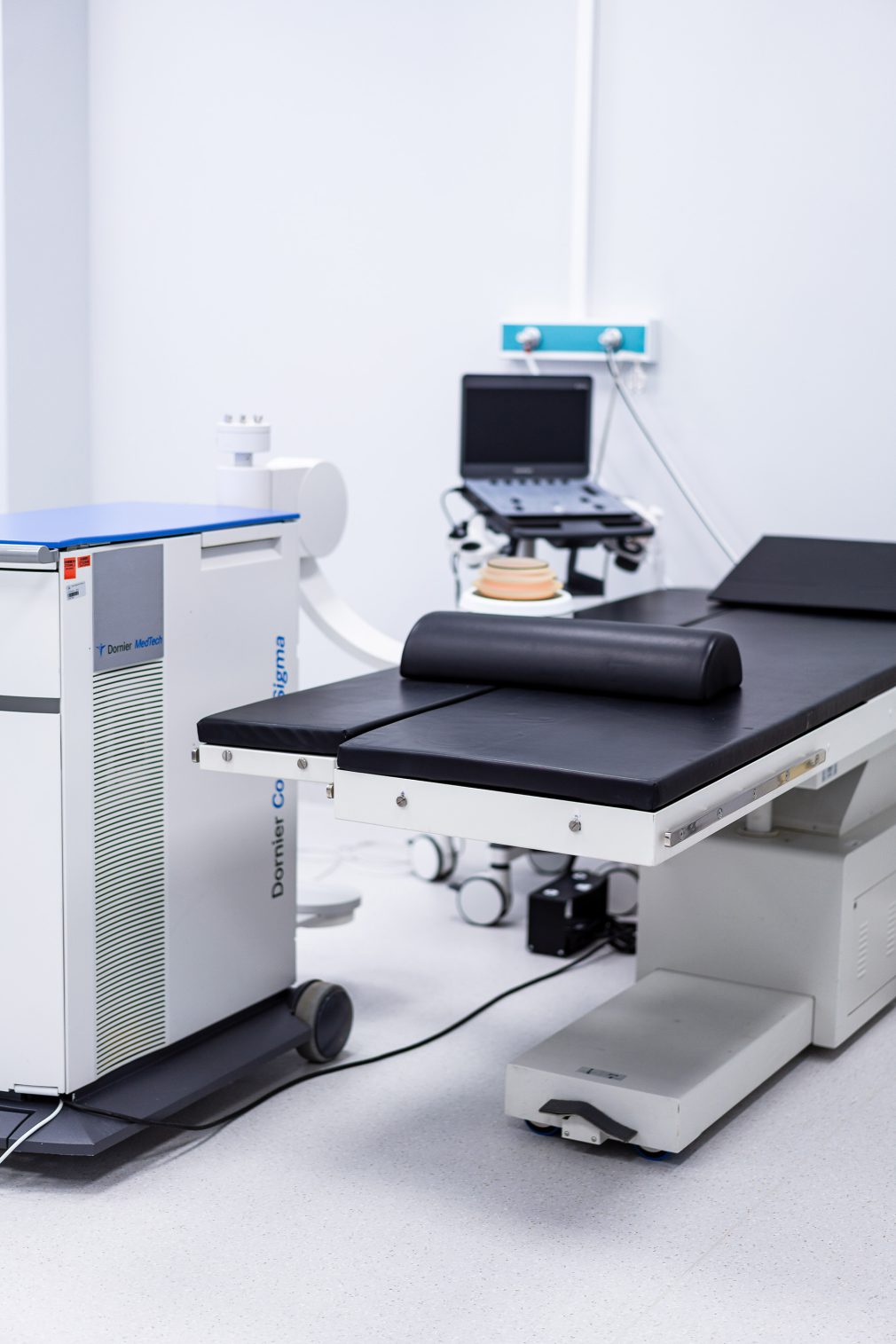
Dornier Compact Sigma
We use the Dornier Compact Sigma device https://youtu.be/TEUplfquCOU?si=C-Jewi9Biw5PU6aL under safe ultrasound guidance.